How Do Muscles Work?
For the last 16 months, I have been bothered by a quad strain that I could not get better. I did what every master's-level athlete would do—I ignored it. I continued to train, and I even raced two 50K runs, thinking a miracle would heal my quad. I took time off. I used every muscle gel known, I tried strengthening exercises, and I used percussion tools. I even did a little bit of stretching. I finally gave in and sought the help of my good friend and fantastic chiropractor, Dr. Rob Green. Through Active Release, dry needling, and more focused mobility work, I started to improve. This injury has led me to this blog. How does muscle work, and why won't mine heal?
Skeletal muscles attach to bones, and they control voluntary movements including walking, running, chewing, lifting, and swimming. The nervous system, made up of the brain, spinal cord, and nerves, must send a signal to the muscle to move. This sets off a chemical reaction that converts chemical energy into mechanical motion. This chemical energy comes from the food we eat, which creates ATP. ATP is the energy that causes the muscle to move. With the signal from the nerve, ATP activates actin and myosin, the contractile proteins of the muscle, which leads to contraction, or shortening, of the muscle. Muscles can be antagonistic to each other. The knee is mostly flexed by the hamstring muscles and extended by the quadriceps muscles. The elbow is mostly flexed by the biceps and extended by the triceps.
Injury to a muscle (strain or tear) can lead to shortening of the muscle or failure to return to its original length. Injury to the muscle can prevent the gliding of the muscle and tendon within its sheath. This loss of motion is seen as pain, loss of flexibility, loss of power, and injuries elsewhere because of compensation. I had lost a large amount of my quad's ability to contract normally. This led to tightness in my quadriceps, hamstrings, and low back as they tried to compensate while I continued to train. Through Dr. Green's Active Release, dry needling, and deep tissue massage, I have restored most of my quadriceps and hamstring flexibility. I am not trying to become super flexible, but I need adequate range of motion to stay healthy, train, and compete. Now, I need to restore or gain strength through this full range of motion.
If you have a muscle strain, I suggest focusing on mobility. Get the muscle back to its normal length, and then develop strength and endurance. Ignoring the problem, training through it, and just hoping (like I tried) rarely works. As we age, we lose mobility. Make sure mobility is part of your routine. This can be yoga or any type of stretching. Regardless of your knowledge base, seek out other medical professionals. Dr. Green has me back on track and headed in the right direction, with mobility serving as one key foundation of healthspan.
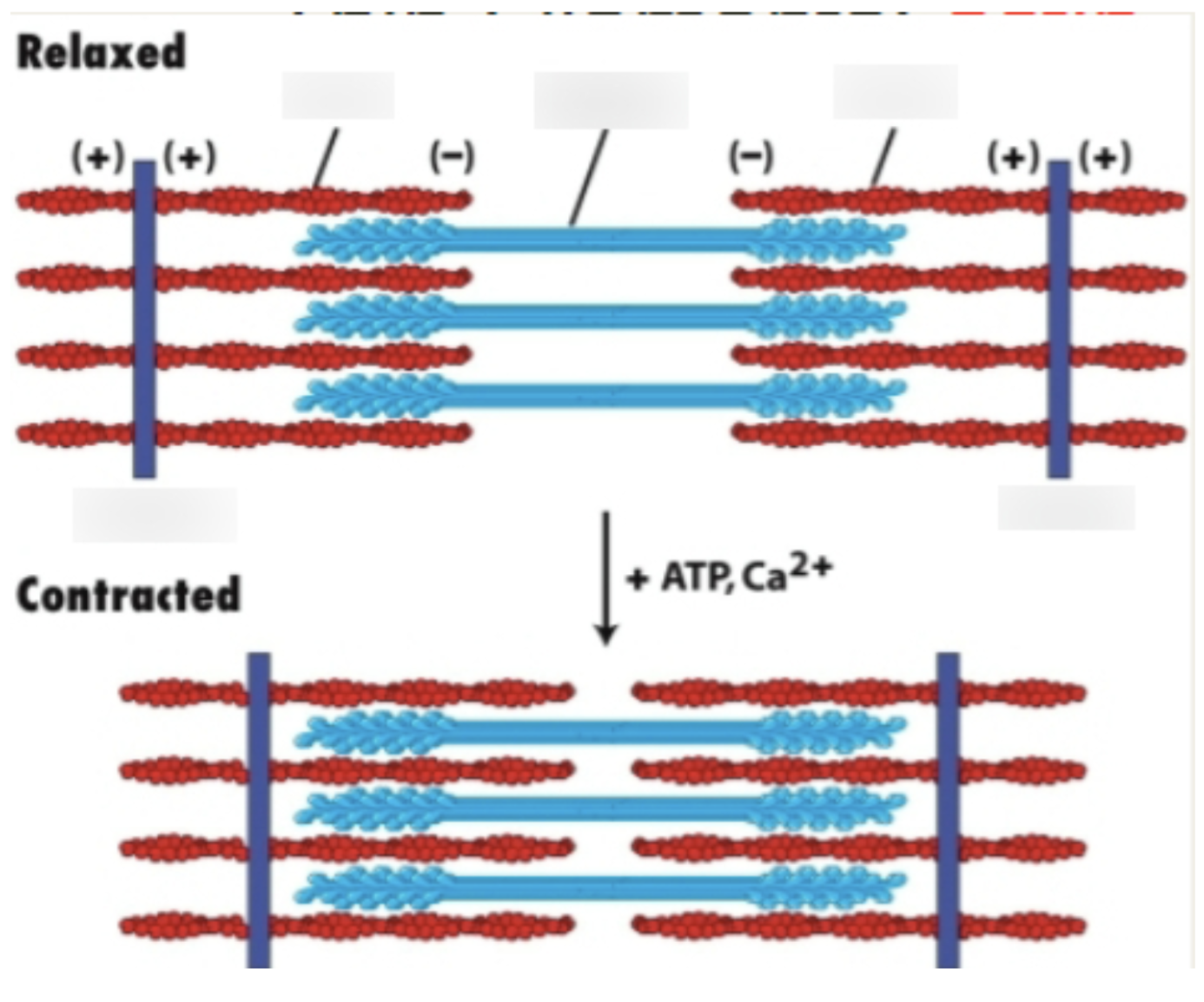
Picture of the muscle fiber relaxed and then contracted. The actin ( red) contracts with the myosin ( blue) using ATP as energy.